Workshop air quality monitoring that can trigger a response.
Track airborne particulate conditions on the local GRIT Hub, keep historical readings, set thresholds, and activate compatible filtration when conditions cross the level you configure.
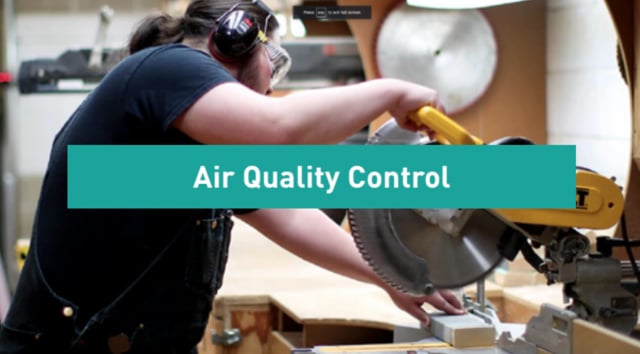
You can’t fix what you can’t measure.
Airborne particulate conditions change as tools, dust collection, filtration, doors, and ventilation move through a workday. A local sensor gives the shop a consistent signal to review.
Particulate you cannot judge by sight
A room can look clear while the sensor reading is still changing. Visual inspection alone does not provide a repeatable operating record.
No configured warning point
Without a local threshold and response plan, changing conditions depend on someone noticing and deciding what to do next.
No historical baseline
Spot checks do not show how readings change by tool, operation, zone, or ventilation configuration over time.
Filtration response gaps
A sensor can provide another input for deciding when compatible ambient filtration should run.
Multi-zone blind spots
Air quality varies dramatically between zones. The area near the saw is not the same as the assembly area. One sensor doesn’t cut it.
Reactive operating decisions
Without a shared reading and threshold, filtration and ventilation changes can become inconsistent from one shift or class to the next.
Continuous sensing. Intelligent alerting.
The GRIT Air Quality Sensor continuously samples airborne particulate and reports readings to the local Hub. Configured thresholds can create an alert or activate compatible filtration.
Sensing
Measure particulate conditions by zone.
Place sensors where the shop needs a local reading and operating history. The Hub keeps each reading associated with its configured area.
- Laser-scattering particulate sensing
- PM2.5 visibility in the GRIT interface
- Local historical readings
- Configurable sensor placement
- Multi-zone sensor deployment
- Integration with compatible filtration controls
Intelligence
Know before it’s a problem.
Set local thresholds, review how readings change, and choose the response that fits the equipment and operating plan for that zone.
- Configurable per-zone thresholds
- Threshold alerts in the GRIT interface
- Automatic dust collection triggers
- Historical trend analysis
- Local records for maintenance and EHS review
- Current status in the GRIT interface
Better with Dust Management
When a configured threshold is crossed, GRIT can activate compatible ambient filtration or notify the people responsible for the space. Source collection, ventilation, PPE, and a qualified exposure assessment remain separate parts of the shop plan.

Installed where context matters
Give each monitored zone a local reading.
Mount the sensor in the area where the reading will inform a shop response, then keep its history and thresholds on the local GRIT Hub.
How it works.
Mount GRIT Air Quality Sensors in the zones where a local particulate reading will inform an operating decision.
Configure an alert or response threshold for each zone based on the facility’s assessment and operating plan.
Sensors report current readings to the Hub. The GRIT interface shows status for the configured zones.
When a reading crosses its configured threshold, the system can create an alert or activate compatible ambient filtration.
Historical readings help the shop compare operations, times, zones, and ventilation or filtration changes.
Readings remain in the Hub’s local operating history for review. These device readings do not by themselves constitute an exposure assessment or a complete regulatory record.
Built for local visibility and a configured response.
Airborne particulate sensing
Use a consistent laser-scattering sensor signal to watch particulate conditions in the configured area.
Zone-based placement
Deploy sensors where the reading will inform a specific filtration, ventilation, or work-practice decision.
Configurable thresholds
Set a separate response point for each zone based on the facility’s operating plan.
Local status
Review current readings and configured zones through the GRIT interface on the local system.
Compatible filtration triggers
Use a threshold to activate compatible ambient filtration equipment managed by GRIT.
Historical trend review
Compare particulate readings over time and review them with tool activity, source collection, filtration, ventilation, and work-practice changes.
Threshold alerts
Notify the shop when a configured response point is crossed so the operating plan can be followed.
Local operating records
Keep readings on the Hub for troubleshooting, maintenance, and EHS review. Use qualified industrial-hygiene methods for exposure assessment and regulatory records.
The gear behind the solution.
Industrial-grade, plug-and-play hardware. Designed and assembled in the USA.
From production cells to campus shops.
Manufacturing & industrial facilities
Monitor particulate conditions across production areas and compare readings with source collection, ambient filtration, and ventilation changes.
Commercial
- Multi-zone particulate monitoring
- Local readings for maintenance and EHS review
- Automatic dust collection integration
- Shift-based particulate trend review
University labs & makerspaces
Give instructors and facilities staff a consistent particulate reading, a local history, and a configured alert or filtration response.
Education
- Lab-specific threshold configuration
- Local particulate history
- Coordination with campus safety staff
- Usage data for ventilation budgeting
Industrial maintenance teams
Use particulate and pressure trends as operating context for filtration response, maintenance planning, and facility review.
Industrial
- Zone-level monitoring
- Local operating history
- Configured filtration response
- Maintenance trend review
A workshop PM2.5 reading is useful context—not an exposure assessment.
PM2.5 describes airborne particles with an aerodynamic diameter of 2.5 micrometers or smaller. A fixed workshop sensor can show how conditions change in its zone, but the result depends on placement, airflow, particle characteristics, and the work happening around it.
Use the local reading to support
- Particulate trend awareness
- Configured alert and filtration responses
- Before-and-after operating comparisons
- Zone and schedule review
- Questions for a qualified assessment
Use qualified methods for
- Personal exposure measurement
- Regulatory compliance determinations
- Respirator selection
- Engineered ventilation validation
- Health or medical conclusions
Placement is part of the measurement.
Mount a sensor where the reading will inform a specific decision, away from conditions that make the result unrepresentative. Use multiple zones when one location cannot describe the whole workspace.
What to know about workshop PM2.5 monitoring.
Part of the complete GRIT platform.
Environmental monitoring integrates seamlessly with GRIT’s full suite of workshop automation.
Dust Management
Automated blast gates and dust collection intelligence.
Collector Monitoring
Filter-pressure, bin-level, and collector runtime context.
Time & Access
Badge time clock and door access control in one system.
Access Control
RFID tool authorization for equipment safety.
Asset Management
Know where everything is. Always.
Get started
Ready to monitor your air quality?
Tell us about your zones and what you need to document. The engineering team handles sensor placement and thresholds.
Workshop air quality monitoring that can trigger a response.
Track airborne particulate conditions on the local GRIT Hub, keep historical readings, set thresholds, and activate compatible filtration when conditions cross the level you configure.
You can’t fix what you can’t measure.
Airborne particulate conditions change as tools, dust collection, filtration, doors, and ventilation move through a workday. A local sensor gives the shop a consistent signal to review.
Particulate you cannot judge by sight
A room can look clear while the sensor reading is still changing. Visual inspection alone does not provide a repeatable operating record.
No configured warning point
Without a local threshold and response plan, changing conditions depend on someone noticing and deciding what to do next.
No historical baseline
Spot checks do not show how readings change by tool, operation, zone, or ventilation configuration over time.
Filtration response gaps
A sensor can provide another input for deciding when compatible ambient filtration should run.
Multi-zone blind spots
Air quality varies dramatically between zones. The area near the saw is not the same as the assembly area. One sensor doesn’t cut it.
Reactive operating decisions
Without a shared reading and threshold, filtration and ventilation changes can become inconsistent from one shift or class to the next.
Continuous sensing. Intelligent alerting.
The GRIT Air Quality Sensor continuously samples airborne particulate and reports readings to the local Hub. Configured thresholds can create an alert or activate compatible filtration.
Sensing
Measure particulate conditions by zone.
Place sensors where the shop needs a local reading and operating history. The Hub keeps each reading associated with its configured area.
- Laser-scattering particulate sensing
- PM2.5 visibility in the GRIT interface
- Local historical readings
- Configurable sensor placement
- Multi-zone sensor deployment
- Integration with compatible filtration controls
Intelligence
Know before it’s a problem.
Set local thresholds, review how readings change, and choose the response that fits the equipment and operating plan for that zone.
- Configurable per-zone thresholds
- Threshold alerts in the GRIT interface
- Automatic dust collection triggers
- Historical trend analysis
- Local records for maintenance and EHS review
- Current status in the GRIT interface
Better with Dust Management
When a configured threshold is crossed, GRIT can activate compatible ambient filtration or notify the people responsible for the space. Source collection, ventilation, PPE, and a qualified exposure assessment remain separate parts of the shop plan.
Installed where context matters
Give each monitored zone a local reading.
Mount the sensor in the area where the reading will inform a shop response, then keep its history and thresholds on the local GRIT Hub.
How it works.
Mount GRIT Air Quality Sensors in the zones where a local particulate reading will inform an operating decision.
Configure an alert or response threshold for each zone based on the facility’s assessment and operating plan.
Sensors report current readings to the Hub. The GRIT interface shows status for the configured zones.
When a reading crosses its configured threshold, the system can create an alert or activate compatible ambient filtration.
Historical readings help the shop compare operations, times, zones, and ventilation or filtration changes.
Readings remain in the Hub’s local operating history for review. These device readings do not by themselves constitute an exposure assessment or a complete regulatory record.
Built for local visibility and a configured response.
Airborne particulate sensing
Use a consistent laser-scattering sensor signal to watch particulate conditions in the configured area.
Zone-based placement
Deploy sensors where the reading will inform a specific filtration, ventilation, or work-practice decision.
Configurable thresholds
Set a separate response point for each zone based on the facility’s operating plan.
Local status
Review current readings and configured zones through the GRIT interface on the local system.
Compatible filtration triggers
Use a threshold to activate compatible ambient filtration equipment managed by GRIT.
Historical trend review
Compare particulate readings over time and review them with tool activity, source collection, filtration, ventilation, and work-practice changes.
Threshold alerts
Notify the shop when a configured response point is crossed so the operating plan can be followed.
Local operating records
Keep readings on the Hub for troubleshooting, maintenance, and EHS review. Use qualified industrial-hygiene methods for exposure assessment and regulatory records.
The gear behind the solution.
Industrial-grade, plug-and-play hardware. Designed and assembled in the USA.
From production cells to campus shops.
Manufacturing & industrial facilities
Monitor particulate conditions across production areas and compare readings with source collection, ambient filtration, and ventilation changes.
Commercial
- Multi-zone particulate monitoring
- Local readings for maintenance and EHS review
- Automatic dust collection integration
- Shift-based particulate trend review
University labs & makerspaces
Give instructors and facilities staff a consistent particulate reading, a local history, and a configured alert or filtration response.
Education
- Lab-specific threshold configuration
- Local particulate history
- Coordination with campus safety staff
- Usage data for ventilation budgeting
Industrial maintenance teams
Use particulate and pressure trends as operating context for filtration response, maintenance planning, and facility review.
Industrial
- Zone-level monitoring
- Local operating history
- Configured filtration response
- Maintenance trend review
A workshop PM2.5 reading is useful context—not an exposure assessment.
PM2.5 describes airborne particles with an aerodynamic diameter of 2.5 micrometers or smaller. A fixed workshop sensor can show how conditions change in its zone, but the result depends on placement, airflow, particle characteristics, and the work happening around it.
Use the local reading to support
- Particulate trend awareness
- Configured alert and filtration responses
- Before-and-after operating comparisons
- Zone and schedule review
- Questions for a qualified assessment
Use qualified methods for
- Personal exposure measurement
- Regulatory compliance determinations
- Respirator selection
- Engineered ventilation validation
- Health or medical conclusions
Placement is part of the measurement.
Mount a sensor where the reading will inform a specific decision, away from conditions that make the result unrepresentative. Use multiple zones when one location cannot describe the whole workspace.
What to know about workshop PM2.5 monitoring.
Part of the complete GRIT platform.
Environmental monitoring integrates seamlessly with GRIT’s full suite of workshop automation.
Dust Management
Automated blast gates and dust collection intelligence.
Collector Monitoring
Filter-pressure, bin-level, and collector runtime context.
Time & Access
Badge time clock and door access control in one system.
Access Control
RFID tool authorization for equipment safety.
Asset Management
Know where everything is. Always.
Get started
Ready to monitor your air quality?
Tell us about your zones and what you need to document. The engineering team handles sensor placement and thresholds.