Retrofit an existing dust collection system. Keep what works.
To retrofit an existing dust collection system, GRIT connects compatible tools, blast gates, collectors, and sensors around the equipment already installed in your shop. Start with one workflow, keep the ductwork that works, and expand without a rip-and-replace project.
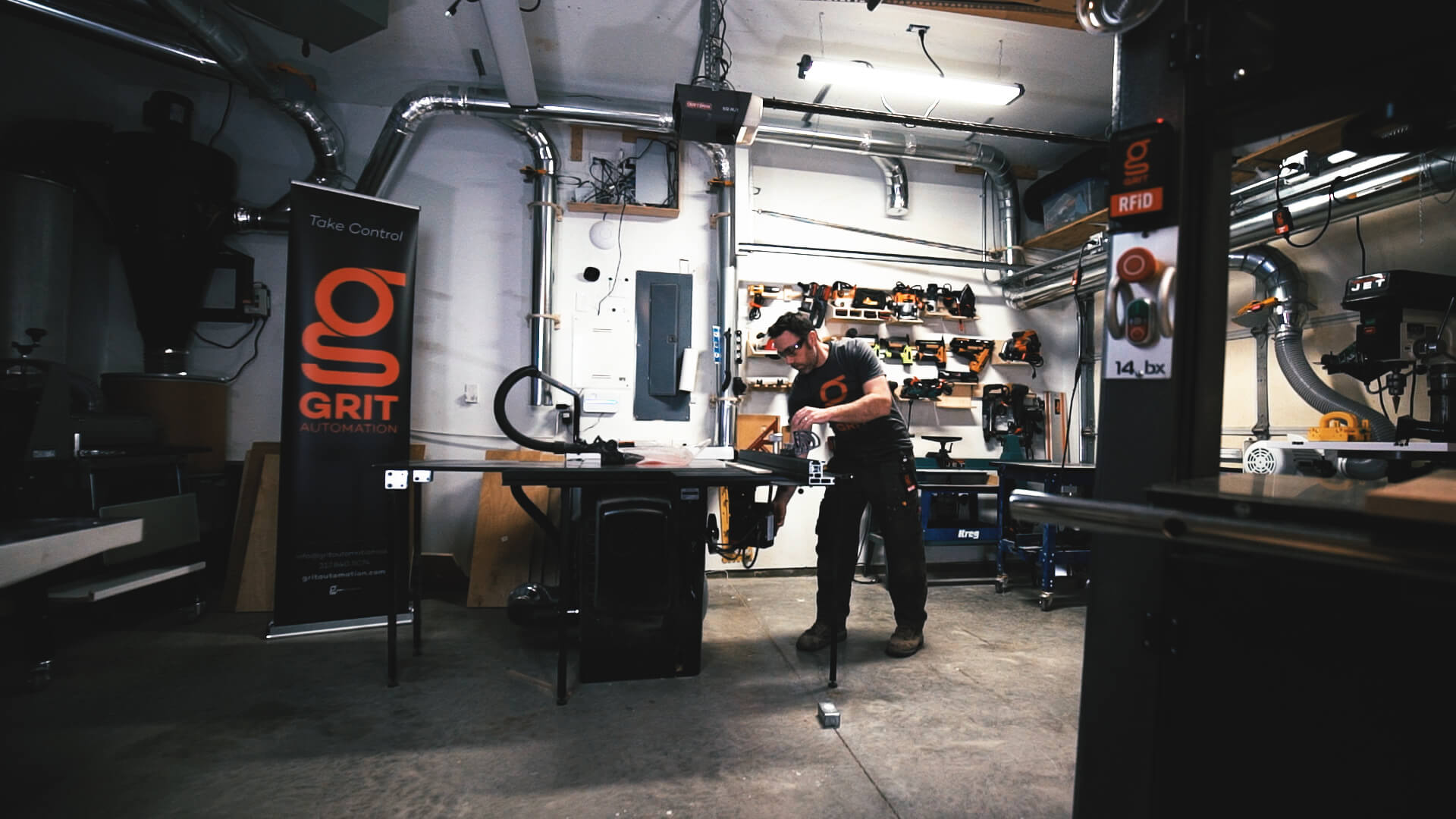
A retrofit begins with an equipment map, not a shopping cart.
The right control path depends on the electrical details of the tools, the movement and size of the gates, the collector interface, and the way the duct system is divided into zones.
Tools
Record phase, voltage, amperage, plug or starter type, dust ports, and the signal that shows when each machine is running.
Blast gates
Record gate diameter, material, slide condition, mounting clearance, and which branches each gate controls.
Dust collector
Identify voltage, motor and starter details, remote-control method, VFD model, and the current start-and-stop sequence.
Ductwork and zones
Mark the airflow path from each machine, shared branches, collector zones, and the combinations that may run together.
Keep the airflow hardware. Add the control layer.
GRIT is designed to sit around compatible infrastructure. The goal is to automate the sequence without rebuilding the part of the system that already does its job.
Keep
Existing shop infrastructure
- Compatible dust collector
- Existing duct runs and branches
- Compatible metal blast gates
- Tools and electrical service
- Current shop network
Add
GRIT automation hardware
- GRIT Triggers for tool demand
- GRIT Gate Controls for compatible gates
- Matched GRIT Collector control
- GRIT Hub or GRIT Hub Pro
- Optional pressure, bin, and air-quality sensors
Compatibility comes before configuration.
A gate that binds, an unknown starter circuit, or an unsupported VFD should be resolved before hardware is specified. GRIT reviews those constraints as part of the system map.
How to retrofit an existing dust collection system.
List tools, gate sizes, collector details, duct branches, operating combinations, and control constraints.
Review free gate movement, electrical ratings, starter or remote behavior, VFD communications, and installation conditions.
Match a GRIT Trigger to each selected tool and a GRIT Collector to the collector interface.
Add Gate Controls, power, and the local Hub around a defined group of high-priority machines.
Assign tools to gates, set collector behavior and delays, then verify each operating combination at the equipment.
Add compatible machines, gates, zones, and sensors after the first workflow is operating as intended.
Match the command to the collector you already own.
GRIT does not use one universal switching method. The collector model and its existing controls determine the correct hardware path.
Direct 120V switching
For compatible 120V collectors within the product electrical rating.
Direct 220V switching
For compatible 220V collectors within the product electrical rating.
Magnetic-starter control
For compatible collectors whose motor is already managed through a mechanical contactor starter.
iR/RF remote control
For compatible collectors that use an infrared or radio-frequency remote.
VFD control over MODBUS
For compatible industrial variable-frequency drives that accept the configured start, stop, and demand commands.
Compatibility review
Collector nameplate, starter photos, remote details, VFD model, and operating sequence establish which path applies.
Electrical work belongs with a qualified electrician.
Hardwired tool, starter, and collector installations should be completed and verified by a licensed electrician familiar with the equipment and local requirements.
Built for existing shops. Built to retrofit.
Automatic airflow and collector response
Open mapped compatible gates, then start, stop, or send configured demand to the collector through the matched control path.
Phased and multi-zone installation
Begin with priority machines, then expand to additional branches or coordinated collection zones through GRIT Hub Pro.
Condition monitoring
Add compatible differential pressure, bin-level, and particulate sensors around the control workflow.
Local operating records
Keep tool demand, gate response, collector activity, and sensor history on the Hub for review.
No rip-and-replace. No starting over.
GRIT does not ask you to replace compatible dust collectors, ductwork, metal blast gates, or tools. Your existing system stays. GRIT adds intelligence on top: Triggers that detect tool activity, Gate Controls that move compatible gates, Collector controls that use the supported command path, and a Hub that coordinates the workflow locally.
That is what GRITified means: existing dust collection infrastructure, made automatic, made measurable, made easier to expand without starting over.
Start where manual collection causes the most friction.
A first phase might cover a table saw, planer, jointer, and CNC that share one collector. Each tool receives the compatible Trigger, each selected branch receives a Gate Control, and the collector receives the matched command hardware. The Hub maps the sequence and keeps the record.
Commission the first workflow
Remove repeated manual gate changes from the highest-use machines, then verify every supported operating combination, collector command, delay, and failure response at the equipment.
Expand after the map is stable
Add the next group of compatible machines, another zone, or pressure, bin-level, and air-quality sensing where those readings support operations.
Use the detail that matches your next decision.

Automatic Blast Gates
See compatibility, tool-to-gate mapping, operating sequence, and common questions.

VFD Dust Collector Control
Review tool-demand mapping and compatible MODBUS VFD control.
GRIT Gate Controls
Review Gate Control size families and product options.
GRIT Collectors
Review the five supported collector-control categories.
What to know before planning a dust collection retrofit.
Get started
Ready to plan your dust collection retrofit?
Send the existing equipment map. GRIT will identify the compatible Trigger, Gate Control, collector-control, Hub, and sensor path.
Retrofit an existing dust collection system. Keep what works.
To retrofit an existing dust collection system, GRIT connects compatible tools, blast gates, collectors, and sensors around the equipment already installed in your shop. Start with one workflow, keep the ductwork that works, and expand without a rip-and-replace project.
A retrofit begins with an equipment map, not a shopping cart.
The right control path depends on the electrical details of the tools, the movement and size of the gates, the collector interface, and the way the duct system is divided into zones.
Tools
Record phase, voltage, amperage, plug or starter type, dust ports, and the signal that shows when each machine is running.
Blast gates
Record gate diameter, material, slide condition, mounting clearance, and which branches each gate controls.
Dust collector
Identify voltage, motor and starter details, remote-control method, VFD model, and the current start-and-stop sequence.
Ductwork and zones
Mark the airflow path from each machine, shared branches, collector zones, and the combinations that may run together.
Keep the airflow hardware. Add the control layer.
GRIT is designed to sit around compatible infrastructure. The goal is to automate the sequence without rebuilding the part of the system that already does its job.
Keep
Existing shop infrastructure
- Compatible dust collector
- Existing duct runs and branches
- Compatible metal blast gates
- Tools and electrical service
- Current shop network
Add
GRIT automation hardware
- GRIT Triggers for tool demand
- GRIT Gate Controls for compatible gates
- Matched GRIT Collector control
- GRIT Hub or GRIT Hub Pro
- Optional pressure, bin, and air-quality sensors
Compatibility comes before configuration.
A gate that binds, an unknown starter circuit, or an unsupported VFD should be resolved before hardware is specified. GRIT reviews those constraints as part of the system map.
How to retrofit an existing dust collection system.
List tools, gate sizes, collector details, duct branches, operating combinations, and control constraints.
Review free gate movement, electrical ratings, starter or remote behavior, VFD communications, and installation conditions.
Match a GRIT Trigger to each selected tool and a GRIT Collector to the collector interface.
Add Gate Controls, power, and the local Hub around a defined group of high-priority machines.
Assign tools to gates, set collector behavior and delays, then verify each operating combination at the equipment.
Add compatible machines, gates, zones, and sensors after the first workflow is operating as intended.
Match the command to the collector you already own.
GRIT does not use one universal switching method. The collector model and its existing controls determine the correct hardware path.
Direct 120V switching
For compatible 120V collectors within the product electrical rating.
Direct 220V switching
For compatible 220V collectors within the product electrical rating.
Magnetic-starter control
For compatible collectors whose motor is already managed through a mechanical contactor starter.
iR/RF remote control
For compatible collectors that use an infrared or radio-frequency remote.
VFD control over MODBUS
For compatible industrial variable-frequency drives that accept the configured start, stop, and demand commands.
Compatibility review
Collector nameplate, starter photos, remote details, VFD model, and operating sequence establish which path applies.
Electrical work belongs with a qualified electrician.
Hardwired tool, starter, and collector installations should be completed and verified by a licensed electrician familiar with the equipment and local requirements.
Built for existing shops. Built to retrofit.
Automatic airflow and collector response
Open mapped compatible gates, then start, stop, or send configured demand to the collector through the matched control path.
Phased and multi-zone installation
Begin with priority machines, then expand to additional branches or coordinated collection zones through GRIT Hub Pro.
Condition monitoring
Add compatible differential pressure, bin-level, and particulate sensors around the control workflow.
Local operating records
Keep tool demand, gate response, collector activity, and sensor history on the Hub for review.
No rip-and-replace. No starting over.
GRIT does not ask you to replace compatible dust collectors, ductwork, metal blast gates, or tools. Your existing system stays. GRIT adds intelligence on top: Triggers that detect tool activity, Gate Controls that move compatible gates, Collector controls that use the supported command path, and a Hub that coordinates the workflow locally.
That is what GRITified means: existing dust collection infrastructure, made automatic, made measurable, made easier to expand without starting over.
Start where manual collection causes the most friction.
A first phase might cover a table saw, planer, jointer, and CNC that share one collector. Each tool receives the compatible Trigger, each selected branch receives a Gate Control, and the collector receives the matched command hardware. The Hub maps the sequence and keeps the record.
Commission the first workflow
Remove repeated manual gate changes from the highest-use machines, then verify every supported operating combination, collector command, delay, and failure response at the equipment.
Expand after the map is stable
Add the next group of compatible machines, another zone, or pressure, bin-level, and air-quality sensing where those readings support operations.
Use the detail that matches your next decision.
Automatic Blast Gates
See compatibility, tool-to-gate mapping, operating sequence, and common questions.
VFD Dust Collector Control
Review tool-demand mapping and compatible MODBUS VFD control.
GRIT Gate Controls
Review Gate Control size families and product options.
GRIT Collectors
Review the five supported collector-control categories.
What to know before planning a dust collection retrofit.
Get started
Ready to plan your dust collection retrofit?
Send the existing equipment map. GRIT will identify the compatible Trigger, Gate Control, collector-control, Hub, and sensor path.